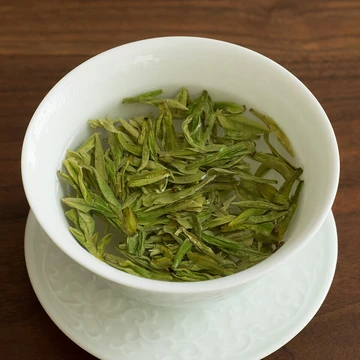
Assam tea
A malty black tea from Assam, India, often used in breakfast blends.

Assam tea is a black tea named after Assam, India, the region of its production. It is manufactured specifically from the plant Camellia sinensis var. assamica. Assam tea is now mostly grown at or near sea level and is known for its body, briskness, malty flavour, and strong, bright colour. Assam teas, or blends containing Assam tea, are often sold as 'breakfast' teas, such as Irish breakfast tea, which consists of small-sized Assam tea leaves.
- type
- Black tea
- region
- Assam, India
- plant_species
- Camellia sinensis var. assamica
- known_for
- Body, briskness, malty flavour, strong bright colour
Lore & Background
Bruce reportedly found the plant growing 'wild' in Assam while trading in the region. Maniram Dewan directed him to the local Singpho chief Bessa Gam. Bruce noticed local people (the Singhpos) brewing tea from the leaves of the bush and arranged with the local chiefs to provide him with samples of the leaves and seeds, which he planned to have scientifically examined. Robert Bruce died shortly thereafter, without having seen the plant properly classified. It was not until the early 1830s that Robert's brother, Charles, arranged for a few leaves from the Assam tea bush to be sent to the botanical gardens in Calcutta for proper examination. There, the plant was finally identified as a variety of tea, or Camellia sinensis var assamica, but different from the Chinese version (Camellia sinensis var. sinensis).
Reader's Guide
Assam tea holds significance as the second commercial tea production region after southern China, and one of only two regions in the world with native tea plants. The state of Assam is the world's largest tea-growing region by production, lying on either side of the Brahmaputra River. Its tropical climate, with high rainfall and extreme humidity, contributes to Assam tea's unique malty taste. Though Assam generally denotes distinctive black teas, the region also produces smaller quantities of green and white teas. Most currently operating tea estates in Assam are members of the Assam Branch of the Indian Tea Association (ABITA), the oldest and most prominent body of tea producers in India.
Did You Know?
- Assam tea is made from the plant Camellia sinensis var. assamica, a variety distinct from the Chinese Camellia sinensis var. sinensis.
- Assam is the world's largest tea-growing region by production, lying on either side of the Brahmaputra River.
Frequently Asked Questions
Who is Assam tea?
Assam tea is a black tea produced in the Assam region of India, made from the Camellia sinensis var. assamica plant. It is one of the most widely consumed black teas in the world.
What are Assam tea's powers/role?
Assam tea is prized for its bold body, brisk character, malty flavour, and deep, bright colour. It serves as a key ingredient in popular breakfast blends like Irish breakfast tea, where small-sized leaves are used.
How does Assam tea's story end?
Assam tea remains a staple of the global tea market today, still cultivated largely at or near sea level in its home region. Its strong, robust profile continues to anchor countless commercial blends worldwide.
What species does Assam tea come from?
Assam tea is produced exclusively from Camellia sinensis var. assamica, a distinct variety of the tea plant. This sets it apart from teas made from the more common C. sinensis var. sinensis.
More in Tea 1-15
Spotted an error? Know more?
This is a living reference — every entry is fact-audited, and reader corrections feed straight into our audit queue. Suggest an edit · See this site's audit record