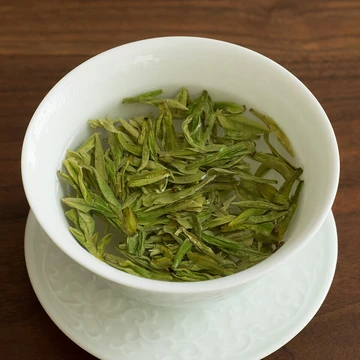
Darjeeling tea
A tea from the Eastern Himalayas with protected geographical indication.

Darjeeling tea is a tea made from Camellia sinensis var. sinensis that is grown and processed in the Darjeeling district or Kalimpong district in West Bengal, India. Since 2004, the term has been a registered geographical indication referring to products produced on certain estates within those districts. The tea leaves are processed as black tea, though some estates also produce green, white, and oolong teas.
- type
- Tea
- origin
- Darjeeling and Kalimpong districts, West Bengal, India
- plant_variety
- Camellia sinensis var. sinensis
- first_planted
- 1841
- geographical_indication
- 2004
- primary_processing
- Black tea (also green, white, oolong)
Lore & Background
Camellia sinensis was first planted in the Darjeeling area in 1841 by Archibald Campbell, who was working for the East India Company. The British were seeking a source of tea outside of China and had both discovered a second variety (assamica) in Assam and smuggled seeds from China. The Chinese variety (sinensis) was planted in Saharanpur Botanical Gardens and propagated in other Himalayan gardens. Campbell acquired seeds from Kumaun via Nathaniel Wallich.
Reader's Guide
The tea is harvested from March to November in four flushes: first flush produces a light floral tea with slight astringency; second flush, after leafhopper and camellia tortrix attack, yields a distinctive muscatel aroma; monsoon flush leaves are less flavorful and used for blending; autumn flush is similar to but more muted than second flush. The tea industry in Darjeeling shifted after Indian independence, with British stakes sold to Indians and the 1953 Tea Act placing it under the Tea Board of India. In the 1990s, as Western Europe and Japan became principal customers, many estates adopted organic, biodynamic, and fairtrade certifications. The Tea Board of India pursues authentication and international promotion of Darjeeling teas.
Did You Know?
- Darjeeling tea was first planted in 1841 by Archibald Campbell of the East India Company.
- The tea leaves are harvested by plucking the top two leaves and the bud from March to November.
- Second flush leaves are harvested after attack by a leafhopper and the camellia tortrix, creating a muscatel aroma.
Frequently Asked Questions
Who is Darjeeling tea?
It is a specialty tea cultivated from Camellia sinensis var. sinensis in the Darjeeling and Kalimpong districts of West Bengal, India, high in the Eastern Himalayas.
What are Darjeeling tea's powers/role?
It is predominantly crafted as a black tea, though select estates also produce green, white, and oolong varieties. Its high-altitude growing environment gives it a distinctive character that sets it apart from other teas.
How does Darjeeling tea's story end?
As of 2004, the name is locked behind a registered geographical indication, so only teas grown on approved estates within those two districts may legally carry the Darjeeling title.
Why is Darjeeling tea important?
First planted back in 1841, it went on to become one of the world's most recognized specialty teas and eventually earned legal protection for its name.
When was Darjeeling tea first introduced?
The earliest tea plants were established in the Darjeeling district in 1841, marking the start of its long production history in the region.
More in Tea 1-15
Spotted an error? Know more?
This is a living reference — every entry is fact-audited, and reader corrections feed straight into our audit queue. Suggest an edit · See this site's audit record