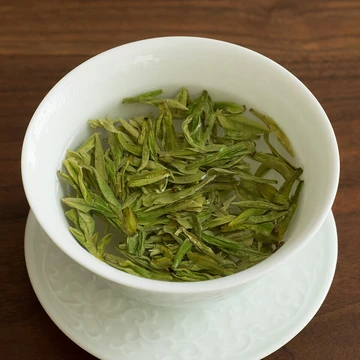
Earl Grey tea
A black tea blend flavoured with bergamot oil.

Earl Grey tea is a tea blend flavoured with oil of bergamot, typically added to black tea. Its name is traditionally associated with Charles Grey, 2nd Earl Grey, a British Prime Minister in the 1830s, though the historical connection is disputed and several legends exist regarding its origin.
- type
- Tea blend
- flavouring
- Bergamot oil (natural or artificial)
- first_known_advertisement_as_Earl_Grey
- 1880s (Charlton & Co. of Jermyn Street, London)
- associated_person
- Charles Grey, 2nd Earl Grey (British Prime Minister in the 1830s)
- common_base_tea
- Black tea (traditionally Chinese keemun)
Lore & Background
Bergamot was reportedly used to enhance the taste of low-quality teas. Several legends attempt to link the tea to Charles Grey, 2nd Earl Grey. Another suggests it was a diplomatic gift after Grey ended the East India Company's monopoly. The Grey family states the tea was specially blended for Lord Grey to suit the water at Howick Hall, using bergamot to offset lime in the local water. Alternative theories propose the tea had nothing to do with any Earl, with the title added later. The first known published references to 'Earl Grey' tea are advertisements from the 1880s. It has been suggested the 'Earl' title was added to make the tea seem more socially refined, or that it became associated with Henry Grey, 3rd Earl Grey.
Reader's Guide
Earl Grey tea holds a significant place in tea culture, particularly in the United Kingdom, where a 2010 survey found many associate it with being 'posh' or 'middle class'. Its modern popularity is also boosted by its association with Patrick Stewart's character Jean-Luc Picard in Star Trek: The Next Generation, for whom 'tea, Earl Grey, hot' is a catchphrase. The blend is not a registered trademark, allowing numerous companies to produce their own versions using various tea leaves and additives. Traditional Earl Grey was made from black teas such as Chinese keemun and intended to be served without milk, though it is sometimes blended with lapsang souchong for a smoky character. Varieties now include green, oolong, and white tea bases, as well as blends like Lady Grey, Russian Earl Grey, French Earl Grey, and Earl Grey Crème. The tea is also used as a flavouring for cakes, confectionery, and savoury sauces, and appears in beverages such as the London fog (with steamed milk and vanilla syrup) and bubble tea. Bergamot oil, the key flavouring, is produced predominantly in Calabria, Italy, which accounts for 90% of the world's supply. There is no conclusive evidence of specific health effects from Earl Grey tea, though black tea consumption may help improve alertness, and its caffeine can interfere with certain prescription drugs.
Did You Know?
- The first known published references to 'Earl Grey' tea are advertisements by Charlton & Co. of Jermyn Street in London in the 1880s.
- Bergamot orange is grown extensively in Calabria, Italy, accounting for 90% of the world's bergamot oil production.
Frequently Asked Questions
Who is Earl Grey tea?
The blend takes its name from Charles Grey, the 2nd Earl Grey, who served as British Prime Minister in the 1830s, though historians dispute whether he actually created or popularized the recipe. Multiple origin legends circulate, and no single verified story has been confirmed.
What are Earl Grey tea's core ingredients?
It is a black tea blend—traditionally built on Chinese keemun—perfumed with oil of bergamot, which can be sourced naturally from the citrus fruit or produced artificially. The citrusy, slightly floral aroma from the bergamot is what defines the blend's signature profile.
What role does Earl Grey tea play in tea culture?
It stands as one of the most widely recognized and consumed flavored tea blends worldwide, serving as a cornerstone of British afternoon tea tradition. Its distinctive citrus note has also made it a popular base for iced teas, desserts, and culinary pairings.
Why is Earl Grey tea important to food and drink history?
It helped establish the concept of citrus-flavoured black tea as a mainstream category, paving the way for countless other aromatic blends. Its enduring popularity since the 19th century makes it a benchmark against which new flavored teas are compared.
More in Tea 1-15
Spotted an error? Know more?
This is a living reference — every entry is fact-audited, and reader corrections feed straight into our audit queue. Suggest an edit · See this site's audit record