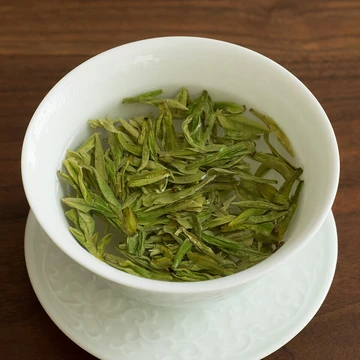
Black tea
A fully oxidized tea with a strong flavor and long shelf life.

Black tea is a type of tea that is more oxidized than oolong, yellow, white, and green teas, and is generally stronger in flavor. It is made from leaves of the shrub Camellia sinensis, with the large-leaved Assamese variety traditionally used mainly for black tea. First originating in China, the beverage is known there as hong cha ("red tea") due to the color of the oxidized leaves. Today it is widespread throughout East and Southeast Asia, and similar variants are available in South Asian countries.
- type
- Beverage
- origin
- China
- main_ingredient
- Camellia sinensis leaves
- caffeine_content
- 2–4%
- typical_brew_temperature
- 90–98 °C
- typical_steep_time
- 3–5 minutes
Lore & Background
Black tea is produced from the leaves of Camellia sinensis, with two principal varieties: the small-leaved Chinese variety (C. sinensis var. sinensis) and the large-leaved Assamese variety (C. sinensis var. assamica). The name 'black tea' is a translation from Chinese hong cha, meaning 'red tea,' referring to the color of the oxidized leaves. The drink is widespread in East and Southeast Asia, including China, Indonesia, Japan, Korea, and Singapore, with similar variants in South Asian countries. Unlike green tea, which loses flavor within a year, black tea retains its flavor for several years, making it a long-standing article of trade. Compressed bricks of black tea served as a form of de facto currency in Mongolia, Tibet, and Siberia well into the 19th century.
Reader's Guide
Black tea is significant for its historical role as a trade commodity and its use as currency in parts of Asia. Its long shelf life made it valuable for long-distance transport. The manufacturing process involves withering, then either CTC (crush, tear, curl) or orthodox processing, followed by full oxidation and drying. The level of oxidation determines the tea type, with fully oxidized leaves becoming black tea. Black tea is graded by quality: whole-leaf teas (highest, graded as 'orange pekoe'), broken leaves, fannings, and dusts. Whole-leaf teas are considered most valuable, while fannings and dusts are used in tea bags for fast brewing. Black tea contains 2–4% caffeine and negligible micronutrients and calories; there is no substantial clinical evidence of medical benefits. The visible film on black tea consists of oxidized polyphenols and calcium carbonate, more pronounced with hard water.
Did You Know?
- Black tea is more oxidized than oolong, yellow, white, and green teas.
- Compressed bricks of black tea served as de facto currency in Mongolia, Tibet, and Siberia into the 19th century.
- Black tea retains its flavor for several years, unlike green tea which loses flavor within a year.
Frequently Asked Questions
What is Black tea?
Black tea is a fully oxidized beverage brewed from the leaves of Camellia sinensis, most often the large-leaved Assamese variety. It sits at the boldest end of the tea spectrum in terms of flavor intensity.
How does Black tea differ from green or oolong tea?
Black tea undergoes complete oxidation of its leaves, which gives it a noticeably stronger taste and a far longer shelf life than partially or non-oxidized varieties such as green, white, yellow, or oolong.
Where did Black tea originate?
The drink first appeared in China, where it is still called hong cha, literally 'red tea,' a name that references the reddish color the leaves take on after full oxidation.
What are the ideal brewing conditions for Black tea?
Steep the leaves in water heated to roughly 90–98 °C for three to five minutes to draw out the full flavor. The finished cup typically carries about 2–4% caffeine.
Why is Black tea considered so important in the tea world?
Its fully oxidized, robust profile makes it the most versatile and widely adaptable tea type, which is why it has spread across East and Southeast Asia and inspired countless regional variants throughout South Asia.
More in Tea 1-15
Spotted an error? Know more?
This is a living reference — every entry is fact-audited, and reader corrections feed straight into our audit queue. Suggest an edit · See this site's audit record