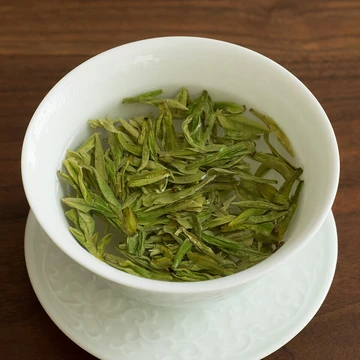
Green tea
Green tea is an unoxidized tea originating in ancient China.

Green tea is a type of tea made from the leaves and buds of the Camellia sinensis that have not undergone the withering and oxidation process used for oolong and black teas. It originated in China in the late 1st millennium BC, and its production and manufacture have since spread to other countries in East Asia. Several varieties exist, differing based on the variety of C. sinensis, growing conditions, horticultural methods, production processing, and time of harvest.
Lore & Background
Tea consumption has legendary origins in China during the reign of mythological Emperor Shennong.
Reader's Guide
Green tea is processed from Camellia sinensis leaves without withering or oxidation, retaining maximum polyphenols and volatile organic compounds. Its production involves growing conditions (sun or shade), harvesting three times per year (first flush in spring yields best quality), and processing via artisanal methods (sun-drying, basket or charcoal firing, pan-firing) or modern methods (oven-drying, tumbling, steaming). While green tea may slightly lower blood pressure and improve alertness, current scientific evidence does not support most health benefit claims, and excessive intake of green tea extracts can cause liver damage and other side effects.
Did You Know?
- Green tea originated in China in the late 1st millennium BC.
- Excessive intake of green tea extracts can cause liver damage and other side effects.
Frequently Asked Questions
Who is Green tea?
Green tea is an unoxidized infusion prepared from the young leaves and buds of the Camellia sinensis plant. Unlike oolong or black teas, it skips the withering and oxidation steps, which keeps its color, flavor, and antioxidant profile distinctly different.
What are Green tea's powers/role?
Its defining trait is the absence of oxidation, giving it a grassy, delicate taste and a high concentration of catechins. Depending on the cultivar, harvest timing, and processing method, it can range from a light sencha to a roasted gyokuro or a stone-pounded Long Jing.
Where does Green tea come from?
It traces its roots to China in the late first millennium BC, and from there its cultivation spread across East Asia. By the mid-2010s, China alone accounted for roughly 80 percent of the world's green-tea market, with the United States as its second-largest importer.
How does Green tea's story end?
It doesn't—it is still being grown and consumed worldwide, with global output hitting around 1.7 million tonnes in 2013. Its narrative continues through new cultivars, regional styles, and ongoing research into its health benefits.
More in Tea 1-15
Spotted an error? Know more?
This is a living reference — every entry is fact-audited, and reader corrections feed straight into our audit queue. Suggest an edit · See this site's audit record