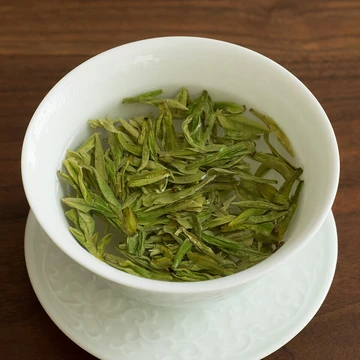
Oolong
A semi-oxidized Chinese tea with diverse flavors and styles.

Oolong is a traditional semi-oxidized Chinese tea (Camellia sinensis) produced through a process that includes withering the leaves under strong sun and allowing some oxidation to occur before curling and twisting. It is especially popular in southeastern China and among ethnic Chinese in Southeast Asia, as is the Fujian preparation process known as the gongfu tea ceremony.
- type
- Tea
- origin
- China
- oxidation_range
- 8% to 85%
- also_known_as
- qingcha (dark green teas) in Taiwan; thé bleu (blue tea) in French
- key_production_regions
- Fujian, Guangdong, Taiwan
Lore & Background
There is no universally agreed upon explanation of the origin of the name; it may have originated from Dragon-Phoenix Tea Cake tribute tea, and later called 'Black Dragon' tea due to its dark, long, curly appearance. Oolong teas share some characteristics with both green and black teas – they have light flavour notes but are often more complex in taste than green teas, and not as strong as black teas. Different styles of oolong tea can vary widely in flavor, from sweet and fruity with honey aromas to woody and thick with roasted aromas, or green and fresh with complex aromas. The leaves are usually formed into one of two distinct styles: some are rolled into long curly leaves, while others are 'wrap-curled' into small beads, each with a tail. The manufacturing involves repeating stages of withering, rolling, shaping, and firing, with much attention to timing and temperature. Tea production in Fujian is concentrated in the Wuyi Mountains and Anxi County. Famous oolongs include Da Hong Pao, Tieguanyin, and Rougui. In Taiwan, oolong teas are also known as qingcha, a term used there for much longer than the early 2000s, and varieties include Dong Ding, Oriental Beauty, Alishan oolong, and Jin Xuan. Other varieties include Darjeeling oolong, Japanese oolongs, and Vietnamese oolongs.
Reader's Guide
Oolong tea holds a significant place in Chinese tea culture, bridging the gap between green and black teas through its controlled oxidation process. Its production requires careful attention to timing and temperature, resulting in a wide spectrum of flavors from sweet and fruity to woody and roasted. The tea is especially popular in southeastern China and among ethnic Chinese in Southeast Asia, where the gongfu tea ceremony is a traditional preparation method. Oolong's legacy is marked by its diverse regional styles, particularly from Fujian's Wuyi Mountains and Anxi County, and from Taiwan's high mountain regions. Famous varieties like Da Hong Pao and Tieguanyin are among the most renowned Chinese teas. The name 'oolong' itself, meaning 'black dragon,' reflects the tea's dark, curly appearance. Oolong continues to be produced in various countries, including Japan, Vietnam, and India, adapting traditional Chinese methods to local conditions.
Did You Know?
- Oolong tea is also known as qingcha (dark green teas) in Taiwan, a term that has been used there for much longer than the early 2000s.
- The degree of oxidation in oolong tea can range from 8% to 85% depending on the variety and production style.
- In French, oolong tea is referred to as 'thé bleu' (blue tea).
Frequently Asked Questions
What exactly is Oolong?
Oolong is a partially oxidized tea made from Camellia sinensis leaves, with its oxidation level spanning anywhere from about 8% up to 85%. This wide range gives it a broad spectrum of flavors compared to fully oxidized black teas or unoxidized green teas.
Where is Oolong produced?
The main growing regions are the Chinese provinces of Fujian and Guangdong, as well as Taiwan. It is particularly beloved in southeastern China and among ethnic Chinese communities throughout Southeast Asia.
How is Oolong actually made?
The leaves are first withered under direct sunlight, then allowed to undergo partial oxidation before being curled and twisted into their characteristic shape. This intermediate step between green and black tea processing is what gives Oolong its distinctive middle-ground character.
What are other names for Oolong?
In Taiwan it is sometimes referred to as qingcha, meaning 'dark green tea,' while French speakers call it thé bleu, or 'blue tea.' The term 'Oolong' itself remains the most widely recognized name in English.
More in Tea 1-15
Spotted an error? Know more?
This is a living reference — every entry is fact-audited, and reader corrections feed straight into our audit queue. Suggest an edit · See this site's audit record