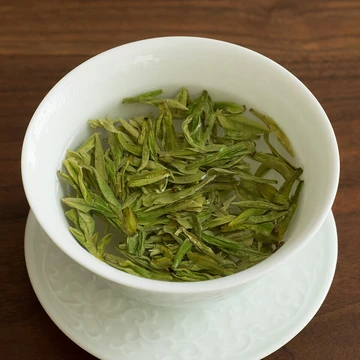
White tea
A minimally processed tea with no generally accepted definition.

White tea is a style of tea made from young or minimally processed leaves of the Camellia sinensis plant. It is produced primarily in China, mostly in the Fujian province, and more recently in other regions including Taiwan, Eastern Nepal, Thailand, Galle (Southern Sri Lanka), and northeast India. The name derives from the fine silvery-white hairs on the unopened buds of the tea plant, which give the plant a whitish appearance, though brewed white tea is pale yellow. There is no generally accepted definition of white tea, and little international agreement on how it can be defined.
- key_characteristic
- Minimally processed; undergoes slight natural oxidation during withering, though the exact degree is not a fixed, widely agreed-upon figure in authoritative sources
Lore & Background
What is today known as white tea may have come into creation in the last two centuries, though scholars and tea merchants generally disagree as to when the first production began. White tea is often sold under the designations China White and Fujian White, or by specific grades such as Silver Needle (Baihao Yinzhen) and White Peony (Bai Mudan); 'Silvery Tip Pekoe' is not a standard white tea grade, though 'Pekoe' is not exclusively a black tea grade and can refer to leaf grades in various tea types, including white tea in some contexts. Some tea from the related wild Camellia taliensis in Yunnan is made using white tea processing techniques.
Reader's Guide
White tea occupies a unique place in tea history due to its minimal processing and the lack of a universally accepted definition. Some sources use the term to refer to tea that is merely dried with no additional processing, making it very close to the natural state of the tea plant. Other sources define it as tea made from buds and immature leaves picked shortly before the buds have fully opened and traditionally allowed to wither and dry under the sun, while others include buds and very young leaves that have been steamed or fired before drying. Most definitions agree that white tea is not rolled or oxidized, resulting in a flavor characterized as lighter than that of most green or traditional black teas. The base manufacturing process involves fresh tea leaf, withering, and drying (air drying, solar drying, or mechanical drying). Chinese white teas are traditionally categorized into a four-level hierarchy of quality: Baihao Yinzhen (just the bud), Bai Mudan (one bud and two leaves), Gongmei (three to four leaves), and Shoumei (many leaves and few buds). The caffeine content of white tea varies widely, from less than 10 mg to over 50 mg per cup, with some studies concluding it tends to have less caffeine than green tea, though other studies have failed to prove a relationship between variety and caffeine content.
Did You Know?
- Brewed white tea is pale yellow, not white.
- Some white tea is made from the wild Camellia taliensis plant in Yunnan.
- The highest quality Chinese white tea, Baihao Yinzhen, consists only of the bud of the tea plant.
Frequently Asked Questions
Who is White tea?
White tea is a Camellia sinensis–based beverage that skips both rolling and oxidation, making it the least processed of the major tea styles. It is most closely tied to China's Fujian province, though cultivation has since spread to Taiwan, Eastern Nepal, Thailand, Galle in southern Sri Lanka, and northeast India.
What are White tea's powers/role?
Its defining trait is minimal intervention: the leaves and buds are left largely untouched, preserving a delicate, subtle flavor profile. Caffeine content is notably variable, ranging from under 10 mg to well over 50 mg per cup depending on the specific preparation.
Where does White tea come from?
Fujian province in China remains the traditional heartland of white tea production. The name itself is a nod to the silvery-white fuzzy hairs that coat the unopened buds, giving the plant a pale, frosted look even though the finished brew is a light golden yellow.
How does White tea's story end?
There is no single canonical conclusion because no universally accepted definition of white tea exists, and international bodies have yet to settle on a precise classification. What counts as 'white tea' can therefore shift depending on the producer, region, or regulatory framework in play.
Why is White tea important?
It occupies a unique niche in the tea world precisely because of that ambiguity—processed just enough to be distinct from raw leaf, yet so little that it borders on unprocessed. Its pale, gentle character makes it a go-to pick for fans who prefer subtlety over boldness.
More in Tea 1-15
Spotted an error? Know more?
This is a living reference — every entry is fact-audited, and reader corrections feed straight into our audit queue. Suggest an edit · See this site's audit record